
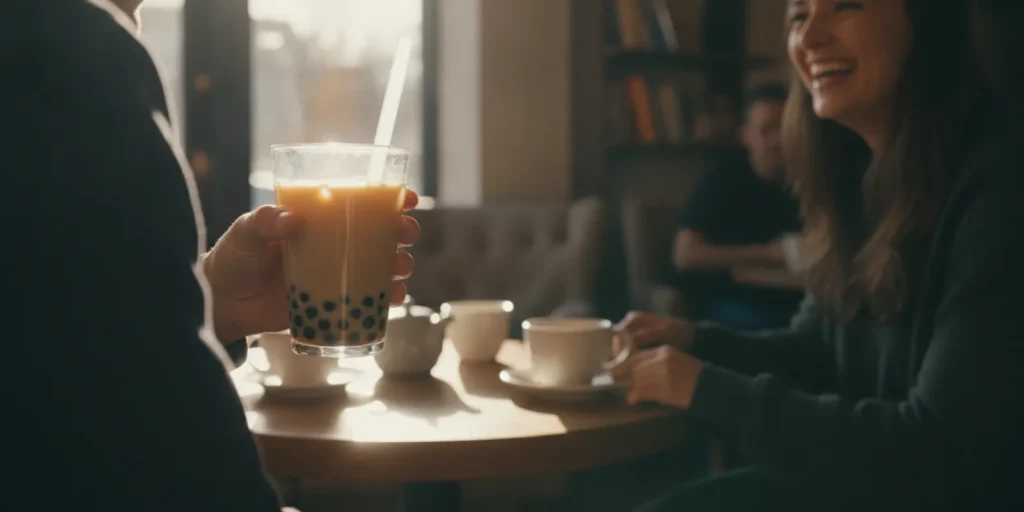
If you have seen a cup of tea with dark, chewy pearls at the bottom and wondered what you are looking at, you are asking a common question: what is boba tea? It is a tea-based drink often served with chewy tapioca pearls, though the name can also refer to the pearls themselves. The cup may be made with milk or fruit flavors, served hot or cold, and adjusted to suit different tastes. If you are in Irving, Texas, start with the boba tea category and check the menu for current details.
Table of Contents
What is boba tea made of?
A typical boba tea has three basic parts: a tea or other drink base, a flavoring or creamy addition, and chewy pearls. The exact recipe depends on the drink. Some versions put tea in the foreground, while others taste more like a creamy milk tea or a fruit-forward iced drink. The pearls add a soft, springy texture that makes the drink different from ordinary iced tea.
The word “boba” most often points to the round pearls, which are commonly made from tapioca starch derived from cassava. In everyday conversation, people also use “boba” for the entire drink. That is why someone might say “boba tea,” “bubble tea,” or simply “boba” and mean much the same thing. Naming habits can vary by person and place.
There is no single recipe that describes every cup. A shop might prepare a drink with brewed tea, milk or a non-dairy alternative, sweetener, ice, and pearls. Other drinks may use a fruit flavor or a different base. Those are general examples, not a guarantee that every combination is on a particular cafe’s menu. Check the current options before deciding what to order.
Are boba tea, bubble tea, and pearl milk tea the same?
Often, yes. “Bubble tea” is a widely used name for the drink, and “boba tea” is another common name. “Pearl milk tea” is also used, especially when describing a milk-tea version served with pearls. Some people use these names interchangeably; others use “boba” to mean the pearls and “bubble tea” to mean the drink.
The word “bubble” does not necessarily mean that the drink is carbonated. It is commonly associated with the bubbles formed when tea is shaken, while the pearls are the chewy pieces at the bottom. When ordering, the simplest approach is to say the style you want—such as tea with milk and pearls—and ask what the menu calls it.
The terms can be confusing if you are new to the drink, but they do not need to be. A quick check of the item description can tell you whether the cup includes tea, pearls, milk, or another component. If you are looking at Milkshakes & More’s offerings, use its current menu to review the listed categories rather than assuming every boba style is available.
Where did boba tea come from?
Boba tea is closely associated with Taiwan. An overview published by the University of Michigan’s Michigan Journal of Economics describes bubble tea as originating in Taiwan during the 1980s. A research article indexed by the U.S. National Library of Medicine notes that boba milk tea became popular across Asia in the 1990s and gained popularity in the United States and Europe after 2000. These brief milestones help explain why a once-regionally associated drink is now familiar to many people in different places.
For more context, see the University of Michigan overview of boba’s growth and the research article on calories and sugars in boba milk tea. The latter focuses on nutritional analysis; it does not mean every drink uses the same ingredients or has the same nutrition profile. Recipes and serving choices differ, so use the information provided for the specific drink you are considering.
How do the pearls change the drink?
The pearls contribute texture more than tea flavor. They are soft and chewy, so a sip can include both liquid and a bite to chew. That contrast is a major part of the experience. If you prefer drinks that are smooth from the first sip to the last, pearls may not be your favorite addition. If you like a drink with a little more going on, they can make a familiar tea feel more playful.
Most cups with pearls are served with a wide straw so the pieces can pass through. Take a small sip at first and chew the pearls rather than trying to drink them quickly. It is a simple way to get used to the texture, especially if this is your first cup. For a group visit, it can also help to say whether you want pearls or a smoother drink before everyone orders.
People sometimes expect pearls to be crunchy, like candy or ice. That is not the usual texture. They are generally described as chewy, and their feel can vary with preparation. Since a particular cafe’s recipe and preparation are not established here, it is better to ask the staff about the texture than to assume that every cup will be identical.
What does boba tea taste like?
There is no single flavor that defines every boba tea. The tea base, creamy ingredients, flavoring, sweetness, and pearls all affect the result. A straightforward tea-based cup can taste familiar to someone who already enjoys iced tea, with the pearls adding a new texture. A milk-tea style may feel creamier, while a fruit-forward drink can put a brighter flavor at the center. Those are broad descriptions rather than guarantees about a particular menu item.
The pearls themselves are valued more for their chew than for a strong flavor of their own. They change the pace of drinking: you alternate between sipping and chewing, instead of finishing a smooth drink in a few gulps. That combination can make boba feel like a small snack-and-drink experience, though the ingredients and portion differ by recipe.
If you are not sure which direction you would enjoy, begin with a familiar base and ask what is in the drink. You can then decide whether you want a creamy addition or chewy pearls. There is no need to order a cup with several unfamiliar elements at once. Keeping the choice simple makes it easier to notice which part you like and helps you describe what you would choose next time.
How do you drink boba tea?
Most boba drinks with tapioca pearls come with a wide straw designed to draw up both liquid and pearls. Insert it through the sealed lid if the drink has one, or use the opening provided. Start with a gentle sip so you can get used to the size and texture of the pearls. Chew them before taking another sip, rather than trying to swallow quickly.
If the cup has been sitting for a while, the pearls may settle at the bottom, so a gentle stir can help distribute the ingredients. Follow any instructions from the cafe, and take your time, especially if you are sharing the drink with a child or someone who has not tried it before. If you do not like chewy toppings, ask whether the drink can be made without pearls or choose a smooth drink instead.
For a first taste, you do not need special equipment or any complicated routine. The wide straw is usually the only difference from sipping an iced drink. If you are unsure about the lid, straw, or toppings, just ask the staff; it is a normal question, not a boba exam.
How can you compare boba tea with other drinks?
Think about what you want the drink to do for you: taste mainly like tea, feel creamy, bring a fruit note, or add chewy texture? The table below compares broad drink styles and terms, not a list of guaranteed menu items. It can help you describe your preference when you look at a cafe menu.
| Drink style or term | What it generally describes | What to check before ordering |
|---|---|---|
| Tea-based boba | A tea drink served with pearls; the tea may be more noticeable than creamy additions. | Ask which tea base is used and whether the drink is served hot or cold. |
| Milk tea with pearls | Tea combined with milk or a creamy addition, usually with chewy pearls when ordered as pearl milk tea. | Check what dairy or non-dairy options are available and how the drink is sweetened. |
| Fruit-style bubble tea | A fruit-forward drink that may be tea-based and may or may not include pearls. | Confirm whether tea, pearls, or another topping is included in that specific item. |
| Iced tea without pearls | A smoother tea drink served cold, without the characteristic chewy pieces. | Ask whether the item is sweetened and whether toppings can be added. |
These are general descriptions, not ingredient promises for a specific shop. Use the menu wording as your starting point, then ask about anything that matters to your choice. A simple question such as “Does this one include pearls?” can clear up uncertainty quickly.
How do you choose a first boba tea?
If the category is new to you, keep your first order simple. Decide whether you want a tea-forward taste or a creamy one, then decide whether you want the chewy pearls. You do not have to choose the most unusual-sounding drink to get a feel for boba. A familiar tea style can make the new texture the main thing you notice.
- Choose the base. Look for a tea-based option if you want tea to be the main flavor. If you prefer a creamier taste, see whether a milk tea is listed.
- Decide on pearls. Pearls are the classic chewy addition, but the word “boba” on its own may not fully explain what is included. Check the description.
- Consider sweetness. Sweetness can come from different ingredients and can vary from one recipe to another. Ask whether a sweetness adjustment is possible instead of assuming it is.
- Choose hot or cold if offered. Temperature can affect how refreshing or comforting a drink feels. Confirm the available serving style for the particular item.
- Ask about ingredients when needed. If you have a dietary concern or need to know what is in a drink, ask the shop directly. Do not rely on a general definition to answer an ingredient or allergy question.
If you are choosing for a group, let each person choose based on the same basics. One person may want a tea-forward drink with pearls, while another prefers a smooth fruit drink or coffee. You can browse the boba tea section and the wider Milkshakes & More site to see which categories fit everyone’s mood. Variety can make a quick Irving stop easier when no two people arrive with quite the same craving.
What should you check before ordering?
Use the actual menu description as the source for what a drink contains. A name alone may not tell you whether it comes with pearls, which tea is used, how it is sweetened, or whether milk is included. Confirm the details that matter to you, especially if you have a dietary restriction or simply prefer a particular texture.
It is also worth checking whether the listed drink can be ordered in your preferred size, temperature, or sweetness level. Availability and customization can change, so avoid planning around an option until you have confirmed it with the shop. The website’s boba tea page is the relevant place to start for category information.
If you want to order online, visit the Milkshakes & More home page and use the current Order Online option shown there. This keeps you on the shop’s current ordering path instead of relying on a third-party link or an outdated bookmark. For a question about menu details, you can also contact the Irving cafe.
Frequently asked questions about boba tea
Does boba tea always contain tapioca pearls?
No. Pearls are a familiar part of many boba drinks, but a menu item’s name does not always tell you exactly which toppings it includes. Check its description or ask before ordering if you want pearls—or would rather skip them.
Is boba tea the same as bubble tea?
Usually, people use the names for the same broad type of drink. Some use “boba” specifically for the pearls and “bubble tea” for the drink, so the exact usage can vary. The item description is the best guide to what a particular cup includes.
Is every boba tea made with milk?
No. Milk tea is one common style, but “boba tea” can refer to a broader range of tea-based drinks. Check the listed ingredients and ask the cafe about a specific drink if you need to know whether it contains milk or an alternative.
Does boba tea have caffeine?
It depends on the drink’s base. A tea-based drink may contain caffeine, while other bases may differ. Ask which base is used and consult the item information if caffeine matters to you; do not assume all drinks in the category are the same.
Ready to try boba tea in Irving?
Boba tea is a flexible name for tea-based drinks often served with chewy tapioca pearls. Once you know the basics, choosing is simple: pick the kind of base you like, decide whether you want pearls, and check the menu details for the particular drink. When you are ready, explore the boba options at Milkshakes & More in Irving and use the current menu or ordering link to plan your stop.